
Resources
Our infographics, policy briefs, reports, and other resources increase understanding of critical topics in public education and provide support for research-based solutions.
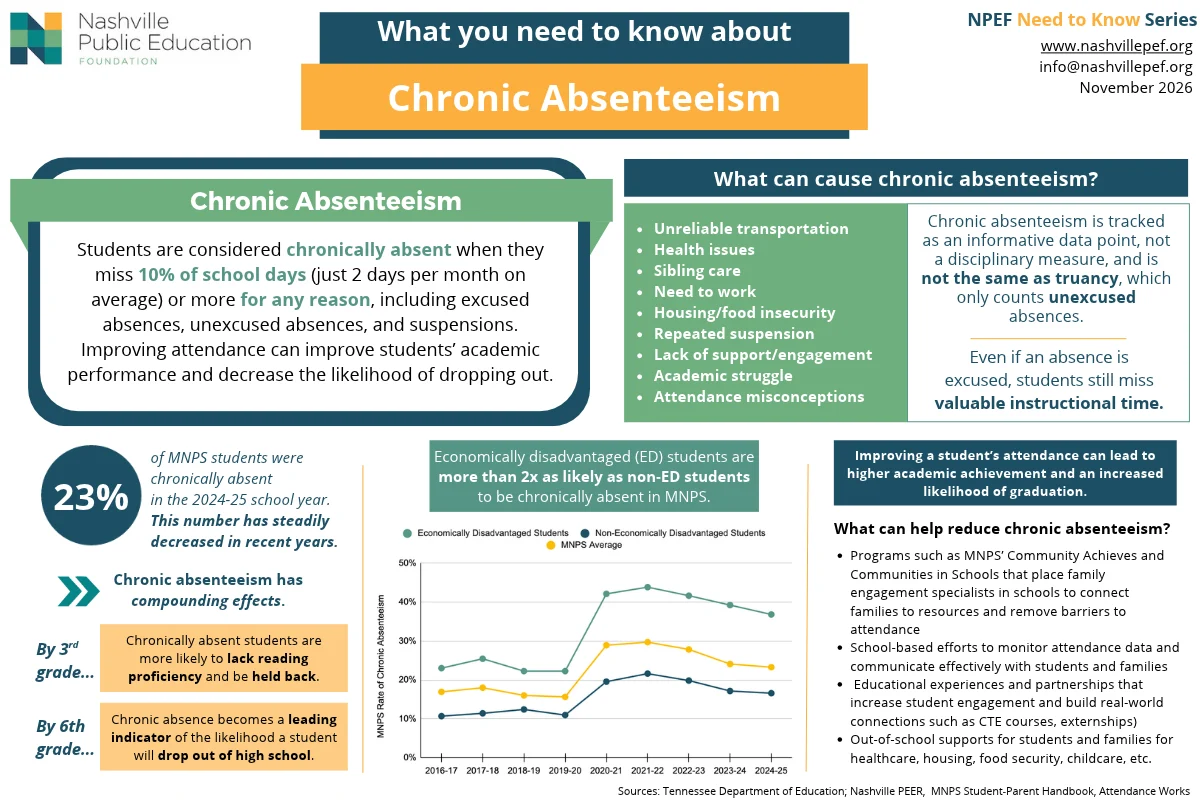
What You Need to Know About Chronic Absenteeism
Students are considered chronically absent when they miss 10% of school days (just 2 days per month on average) or more for any reason, including excused absences, unexcused absences, and suspensions. Improving attendance can improve students’ academic performance and decrease the likelihood of dropping out. Our Need to Know infographic highlights data and supports regarding reducing chronic absenteeism.
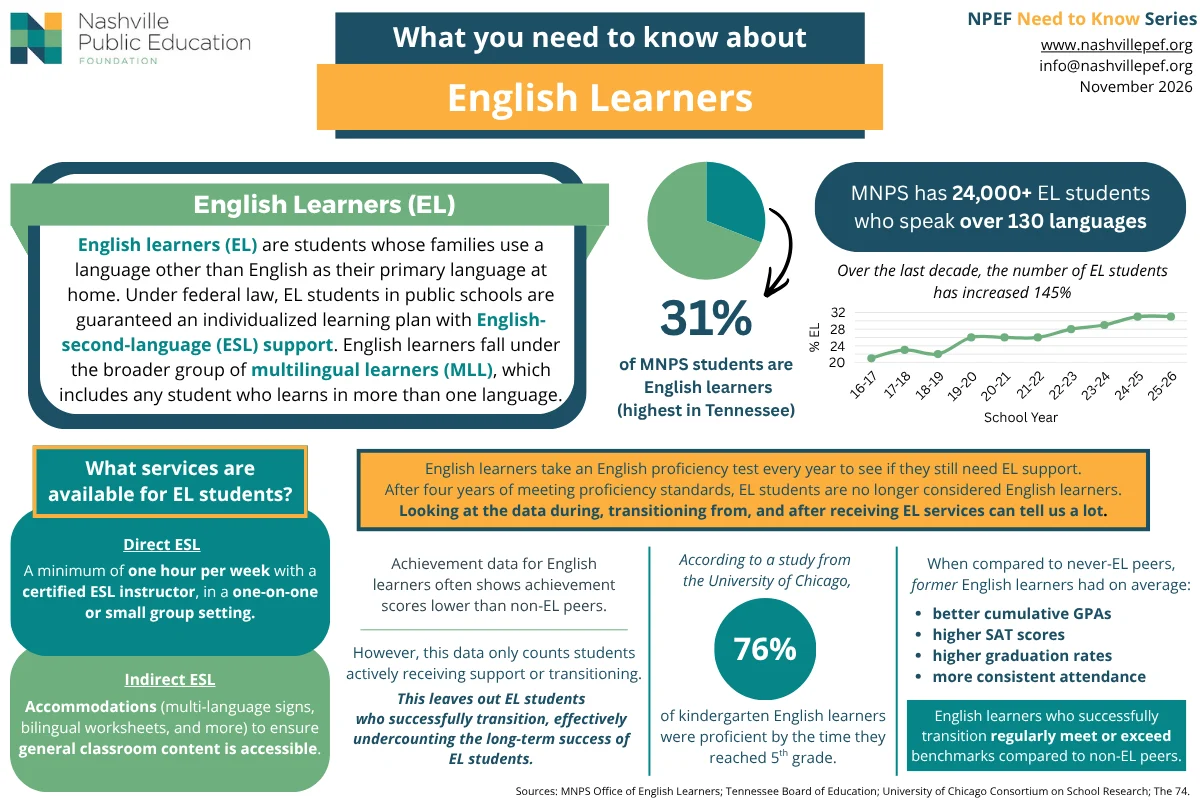
What You Need to Know About English Learners
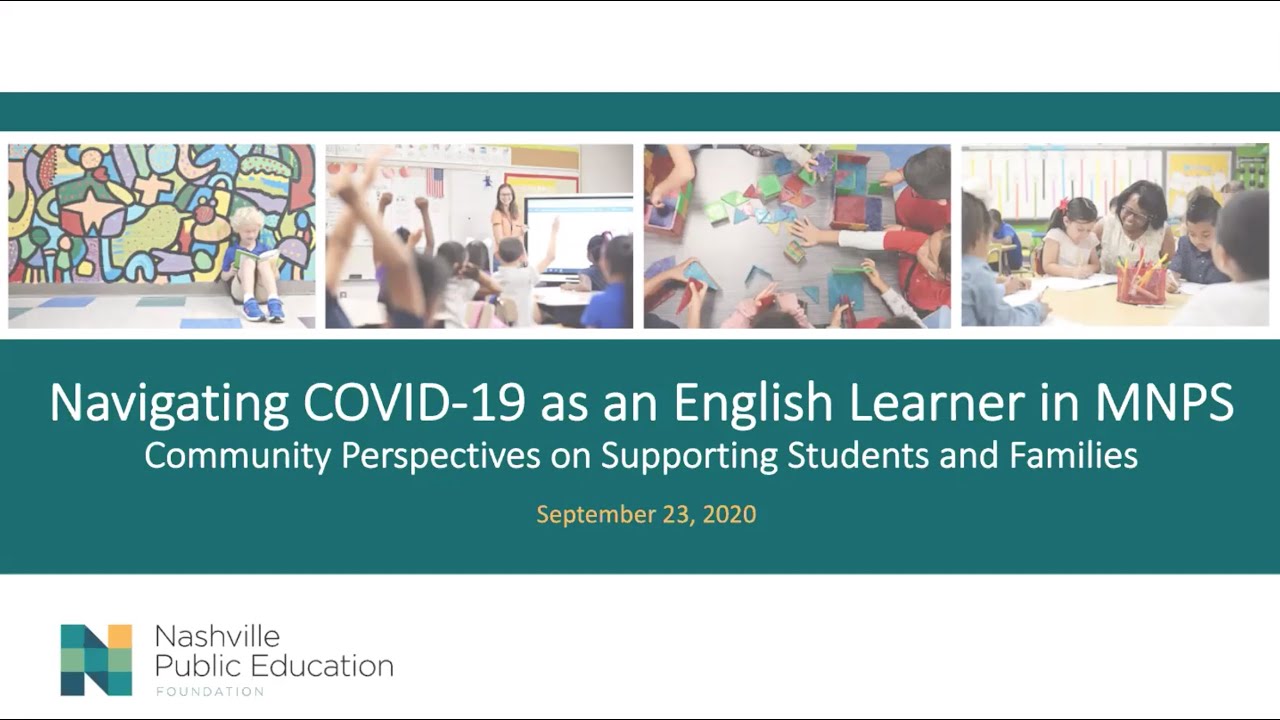
English learners (EL) are students whose families use a language other than English as their primary language at home. Under federal law, English Learner students in public schools are guaranteed an individualized learning plan with English-second-language (ESL) support. Our Need to Know infographic breaks down the supports and data related to English Learners in Nashville.
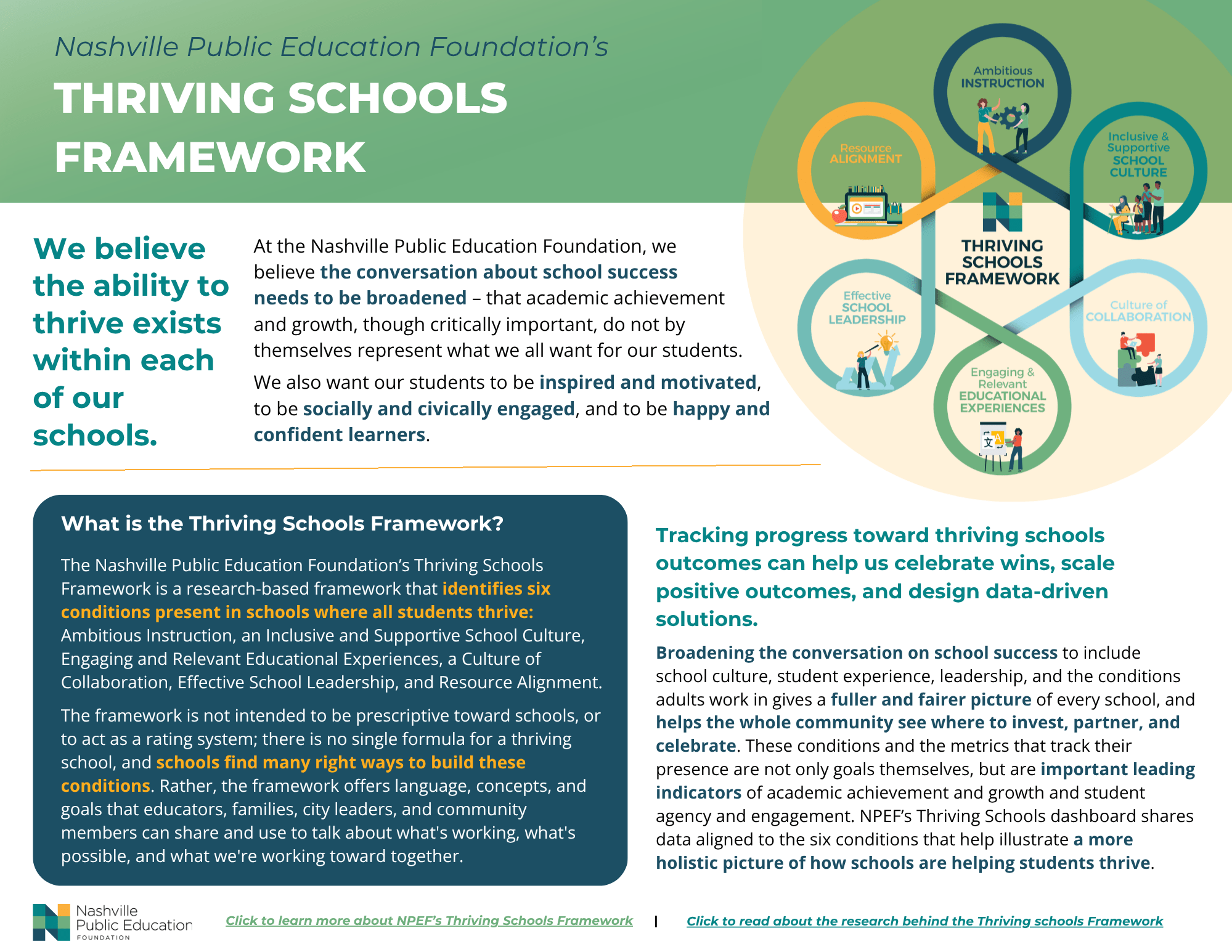
NPEF's Thriving Schools Framework
NPEF’s Thriving Schools Framework is a research-based framework that identifies six conditions present in schools where all students thrive. Its purpose is to offer language, concepts, and goals that educators, families, city leaders, and community members can share and use to talk about what's working, what's possible, and what we're working toward together. In Spring 2026, NPEF heard from over 50 MNPS educators in focus group conversations to share practitioner wisdom on how the framework plays out in our schools.
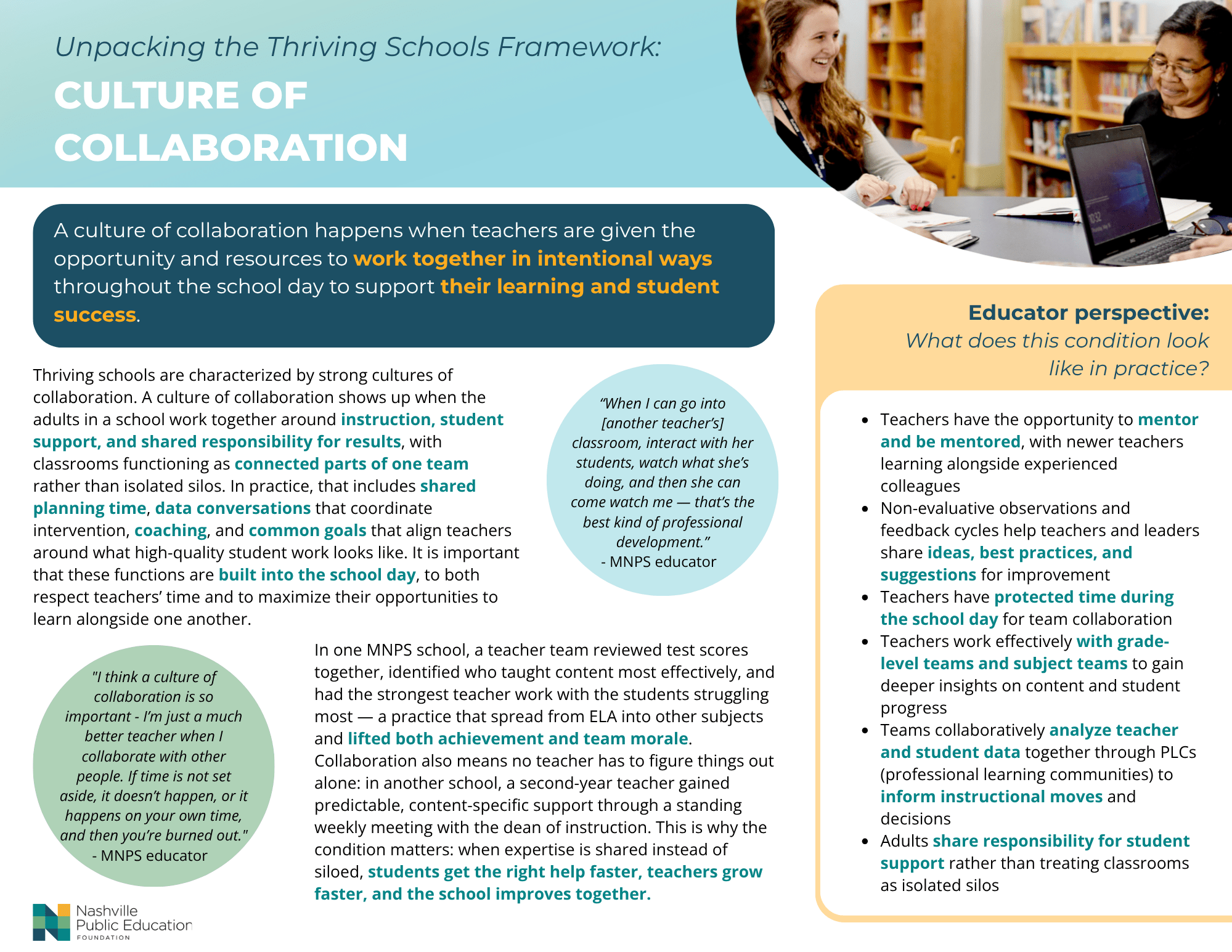
Culture of Collaboration: Unpacking the Thriving Schools Framework
A Culture of Collaboration is one of the six conditions in NPEF’s Thriving Schools Framework, which aims to offer language, concepts, and goals that educators, families, city leaders, and community members can share and use to talk about what's working, what's possible, and what we're working toward together. In Spring 2026, NPEF heard from over 50 MNPS educators in focus group conversations to share practitioner wisdom on how each condition plays out in our schools.
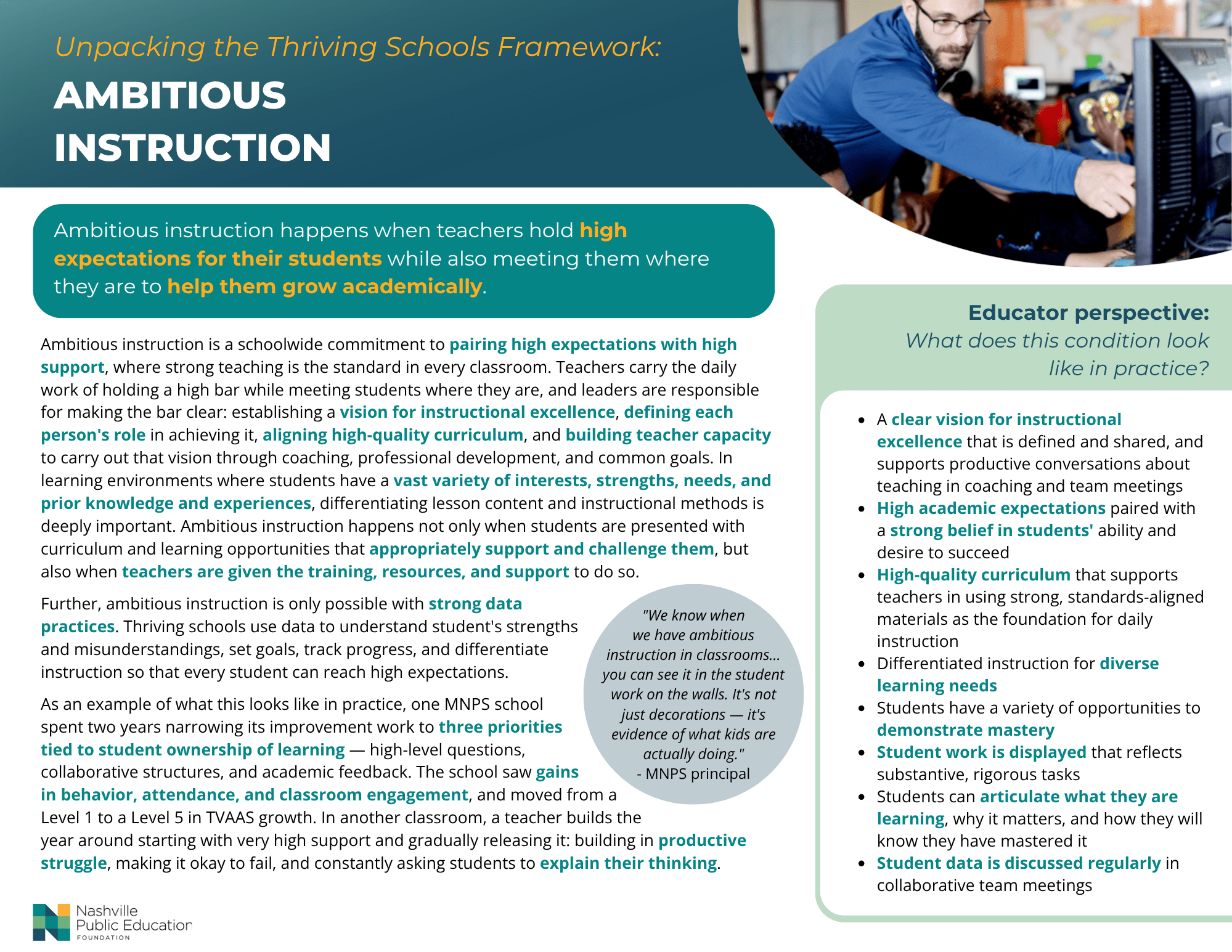
Ambitious Instruction: Unpacking the Thriving Schools Framework
Ambitious Instruction is one of the six conditions in NPEF’s Thriving Schools Framework, which aims to offer language, concepts, and goals that educators, families, city leaders, and community members can share and use to talk about what's working, what's possible, and what we're working toward together. In Spring 2026, NPEF heard from over 50 MNPS educators in focus group conversations to share practitioner wisdom on how each condition plays out in our schools.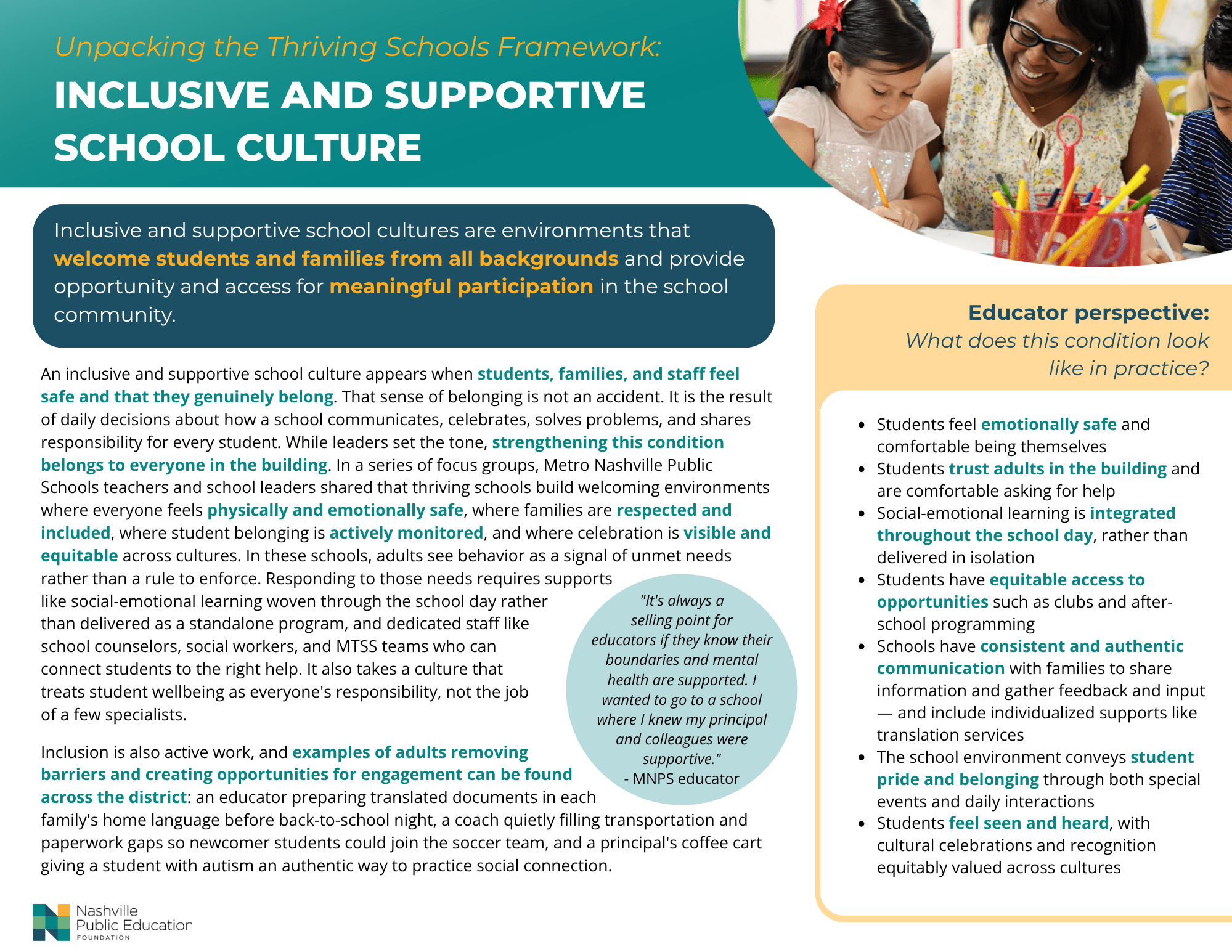
Inclusive and Supportive School Culture: Unpacking the Thriving Schools Framework
An Inclusive and Supportive School Culture is one of the six conditions in NPEF’s Thriving Schools Framework, which aims to offer language, concepts, and goals that educators, families, city leaders, and community members can share and use to talk about what's working, what's possible, and what we're working toward together. In Spring 2026, NPEF heard from over 50 MNPS educators in focus group conversations to share practitioner wisdom on how each condition plays out in our schools.
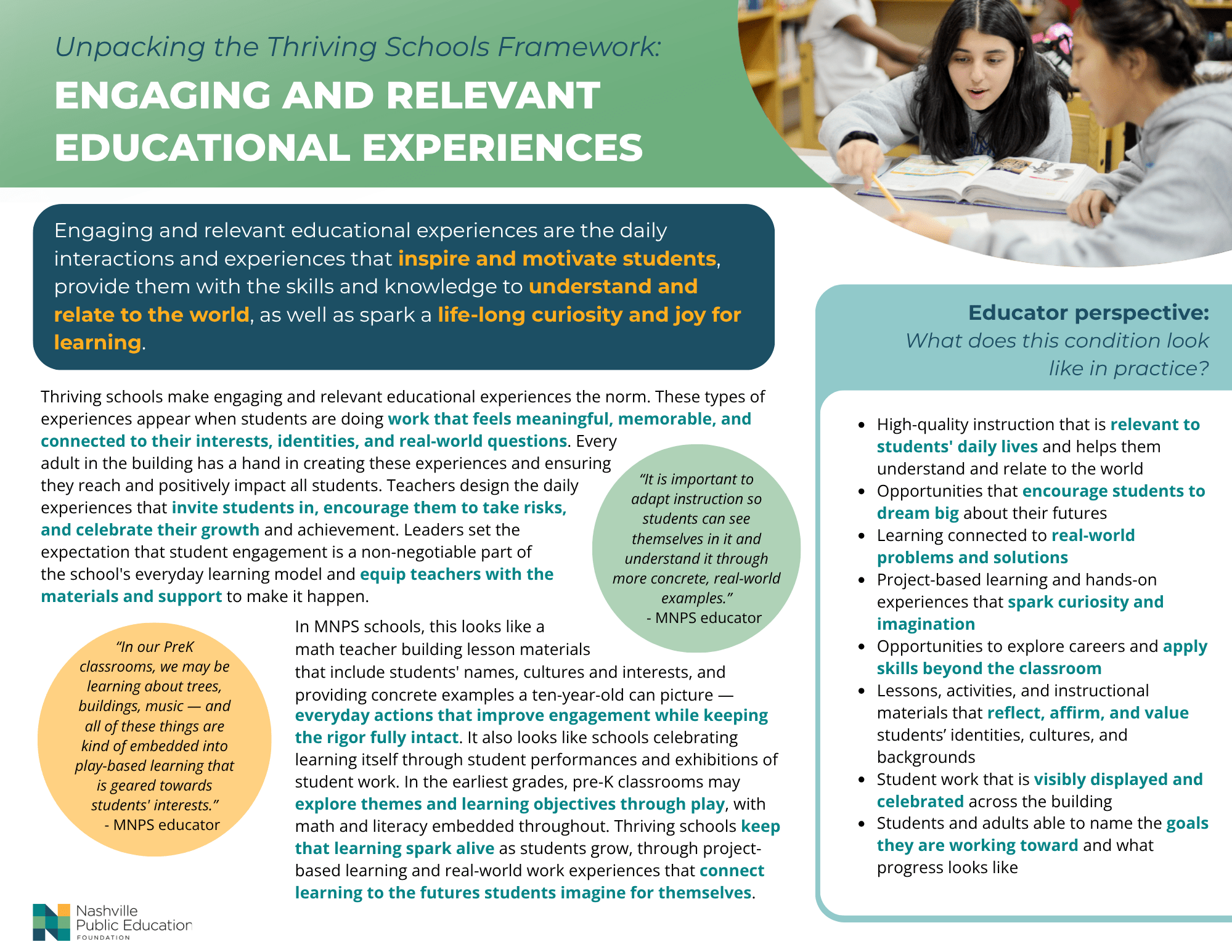
Engaging and Relevant Educational Experiences: Unpacking the Thriving Schools Framework
The presence of Engaging and Relevant Education Experiences is one of the six conditions in NPEF’s Thriving Schools Framework, which aims to offer language, concepts, and goals that educators, families, city leaders, and community members can share and use to talk about what's working, what's possible, and what we're working toward together. In Spring 2026, NPEF heard from over 50 MNPS educators in focus group conversations to share practitioner wisdom on how each condition plays out in our schools.
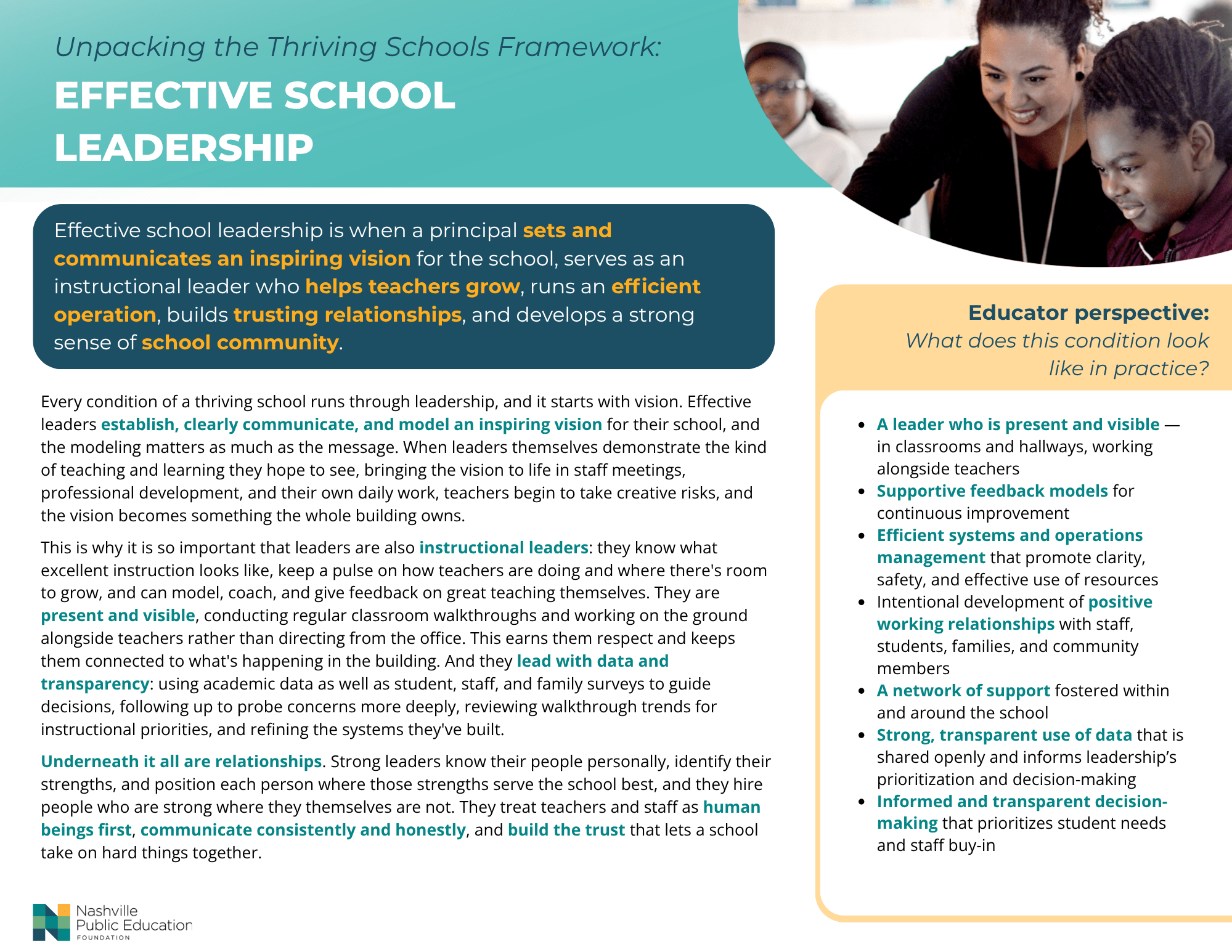
Effective School Leadership: Unpacking the Thriving Schools Framework
Effective School Leadership is one of the six conditions in NPEF’s Thriving Schools Framework, which aims to offer language, concepts, and goals that educators, families, city leaders, and community members can share and use to talk about what's working, what's possible, and what we're working toward together. In Spring 2026, NPEF heard from over 50 MNPS educators in focus group conversations to share practitioner wisdom on how each condition plays out in our schools.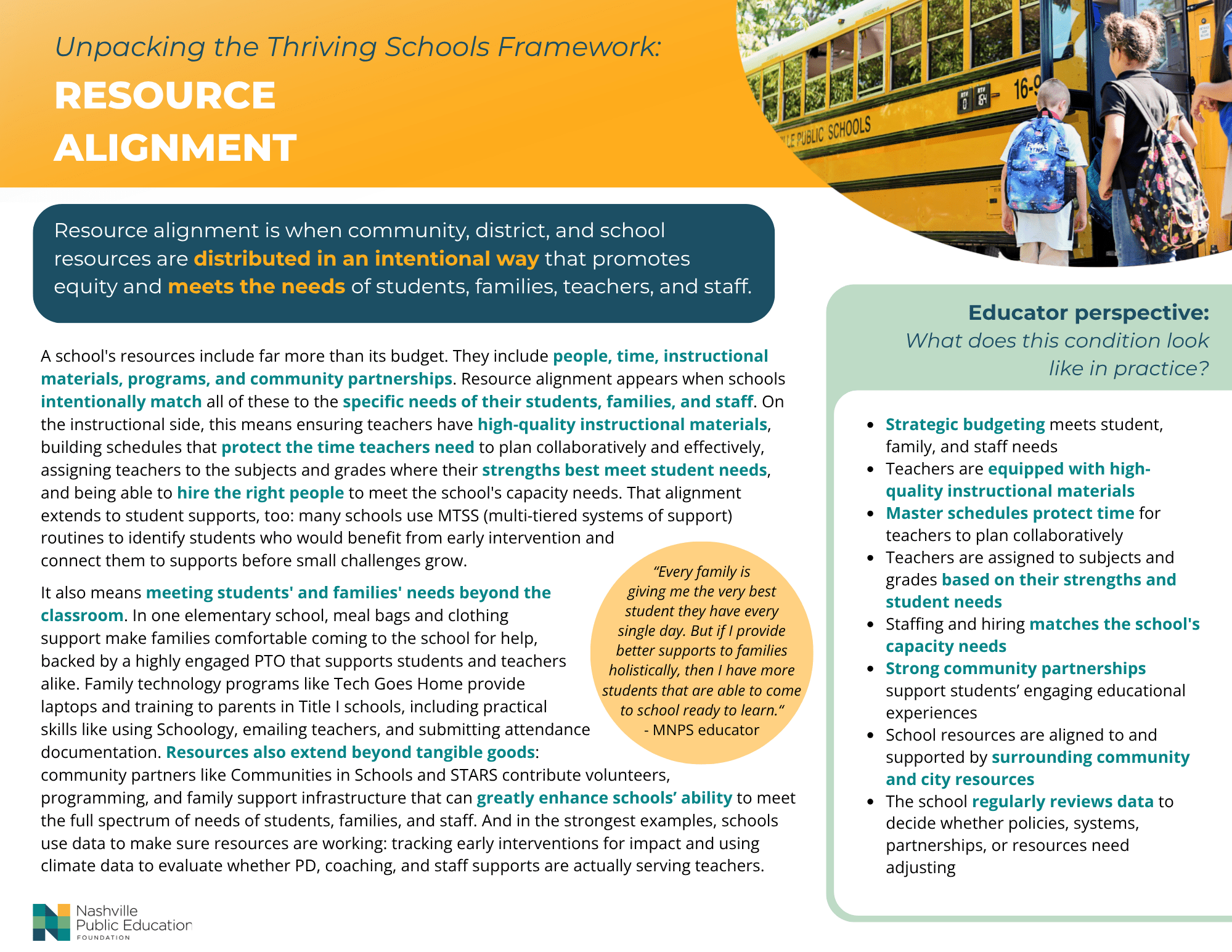
Resource Alignment: Unpacking the Thriving Schools Framework
Resource Alignment is one of the six conditions in NPEF’s Thriving Schools Framework, which aims to offer language, concepts, and goals that educators, families, city leaders, and community members can share and use to talk about what's working, what's possible, and what we're working toward together. In Spring 2026, NPEF heard from over 50 MNPS educators in focus group conversations to share practitioner wisdom on how each condition plays out in our schools.
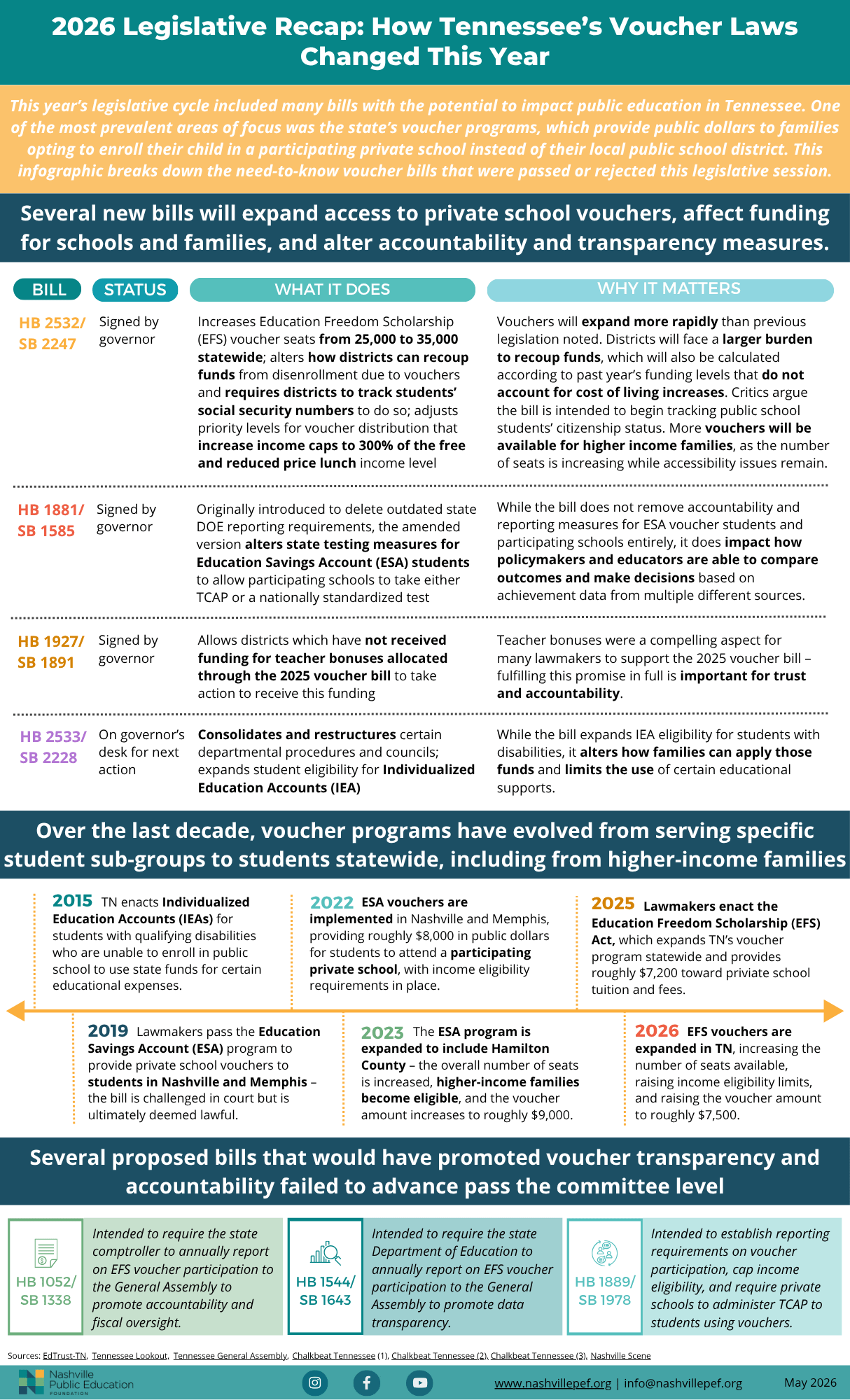
2026 Legislative Recap: How Tennessee’s Voucher Laws Changed This Year
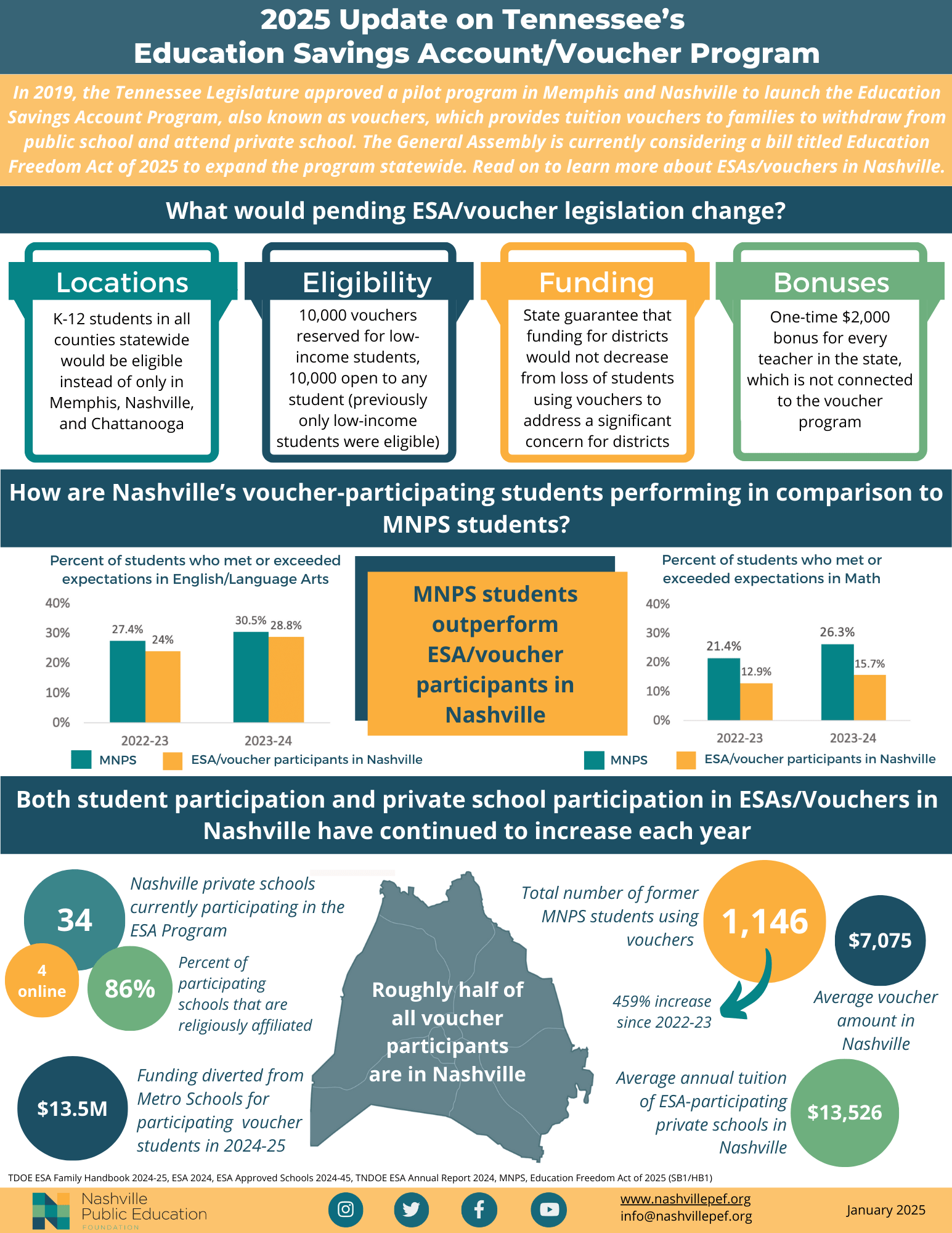
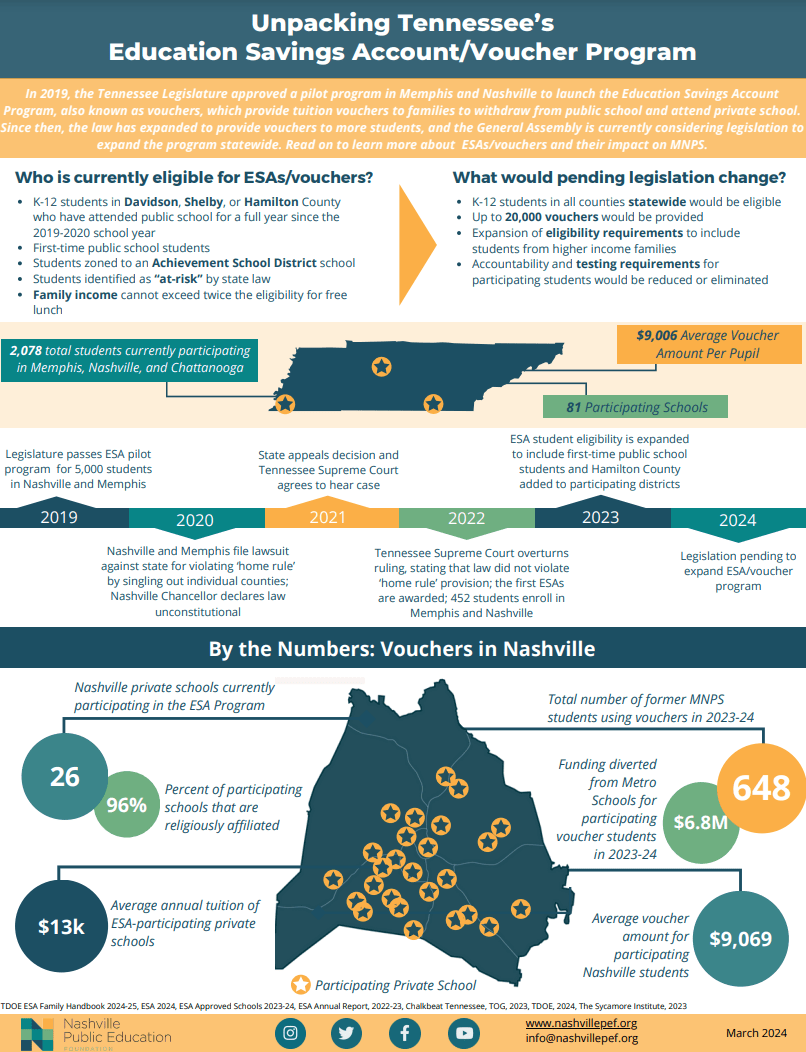
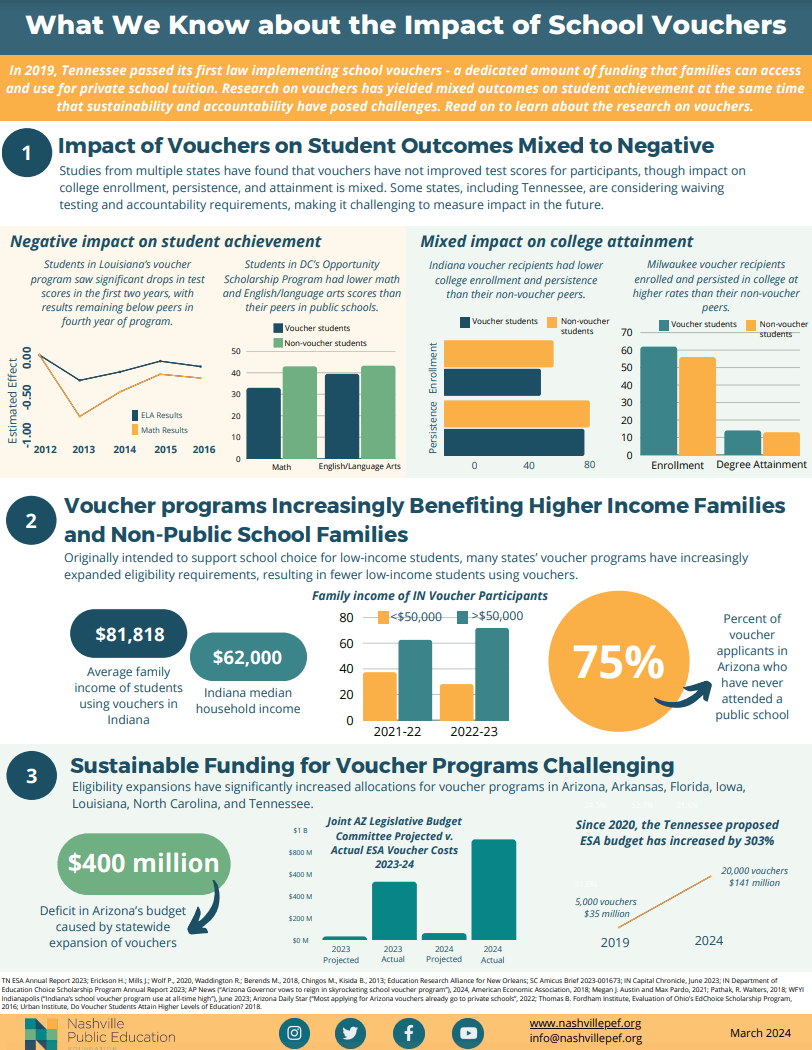
One of the most prevalent areas of focus in the 2026 legislative cycle was the state’s voucher programs, which provide public dollars to families opting to enroll their child in a participating private school instead of their local public school district. Our infographic breaks down the need-to-know voucher bills that had an impact on accountability, access, and transparency.

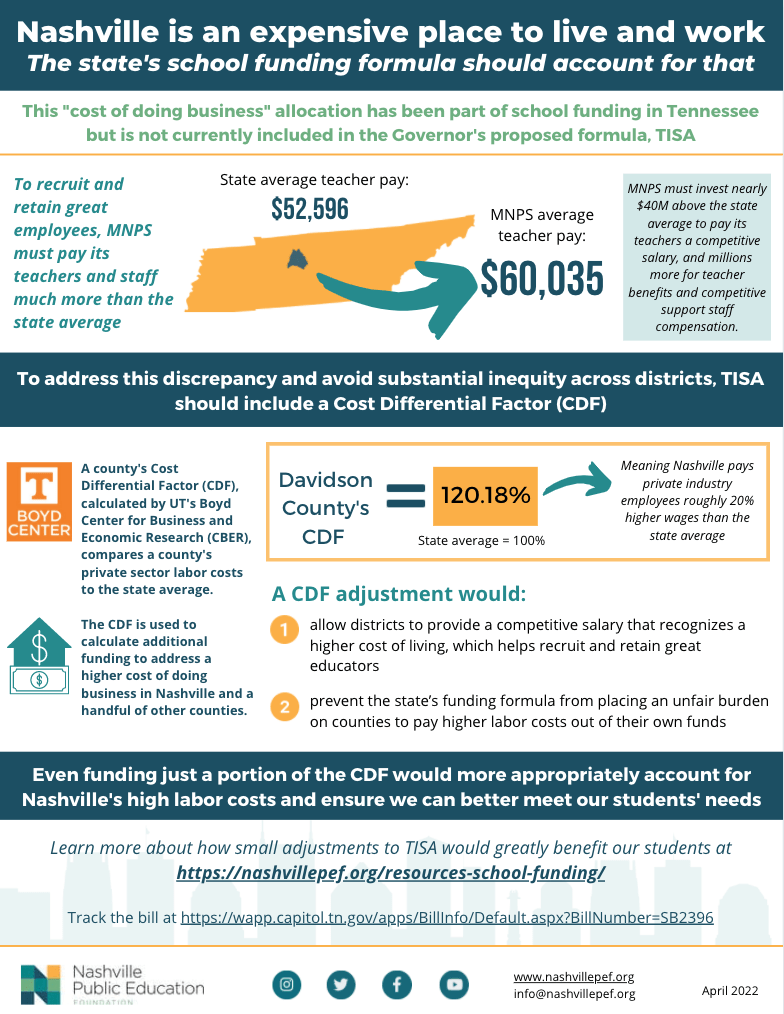
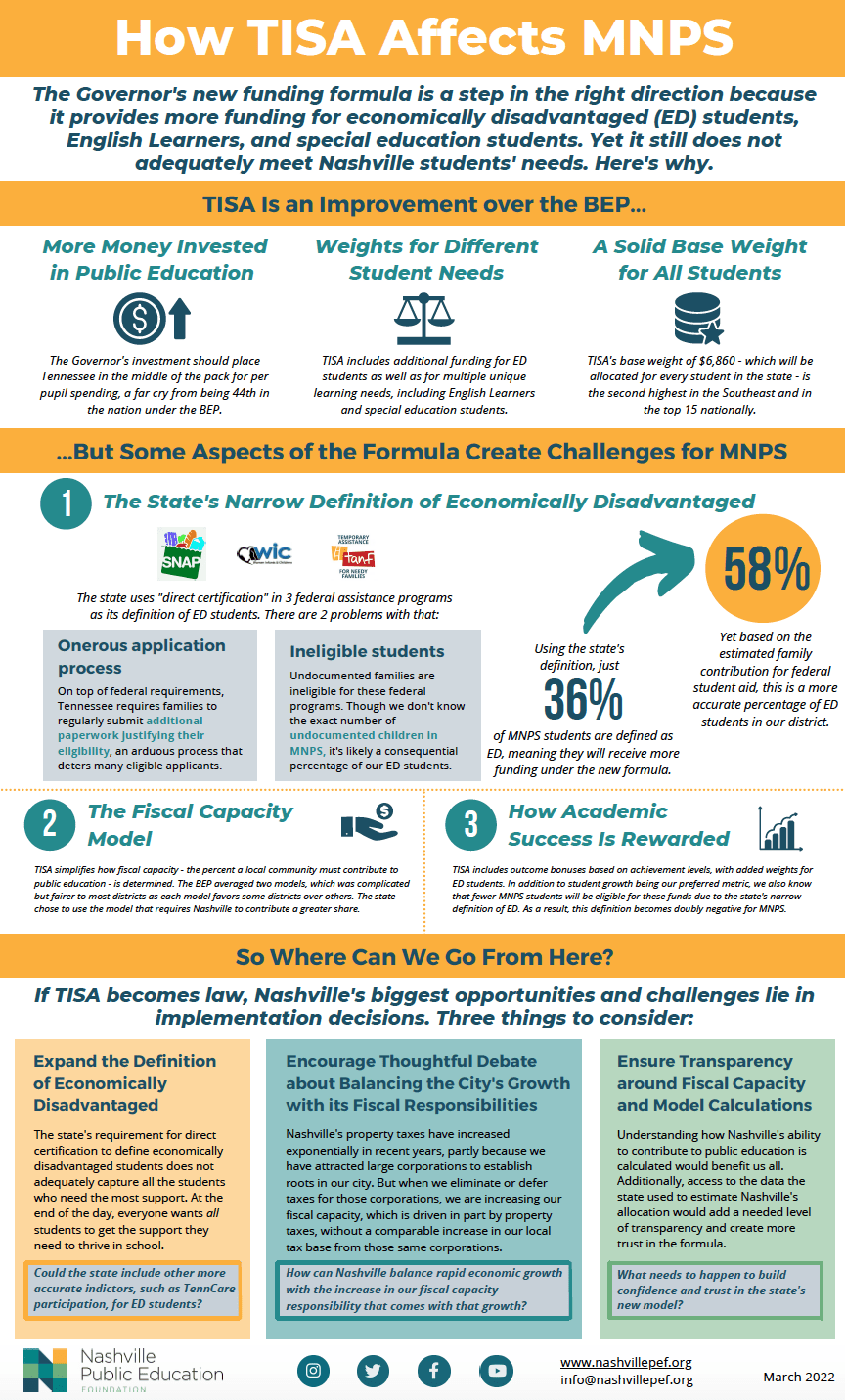
How TN's Definition of "Economically Disadvantaged" Impacts Public Schools
In 2016, Tennessee changed its definition of “economically disadvantaged” students in response to new federal policy that required reporting on this demographic but lacked clear direction on how to do so. Paired with a desire to not overcount this student population, this policy change prompted Tennessee to begin using a stricter definition that would ultimately have significant implications for public school funding.